The shepherd boy with the cleanest eyes—a vision that ended my struggle with David
It wasn’t until this year I fully understood, why David.
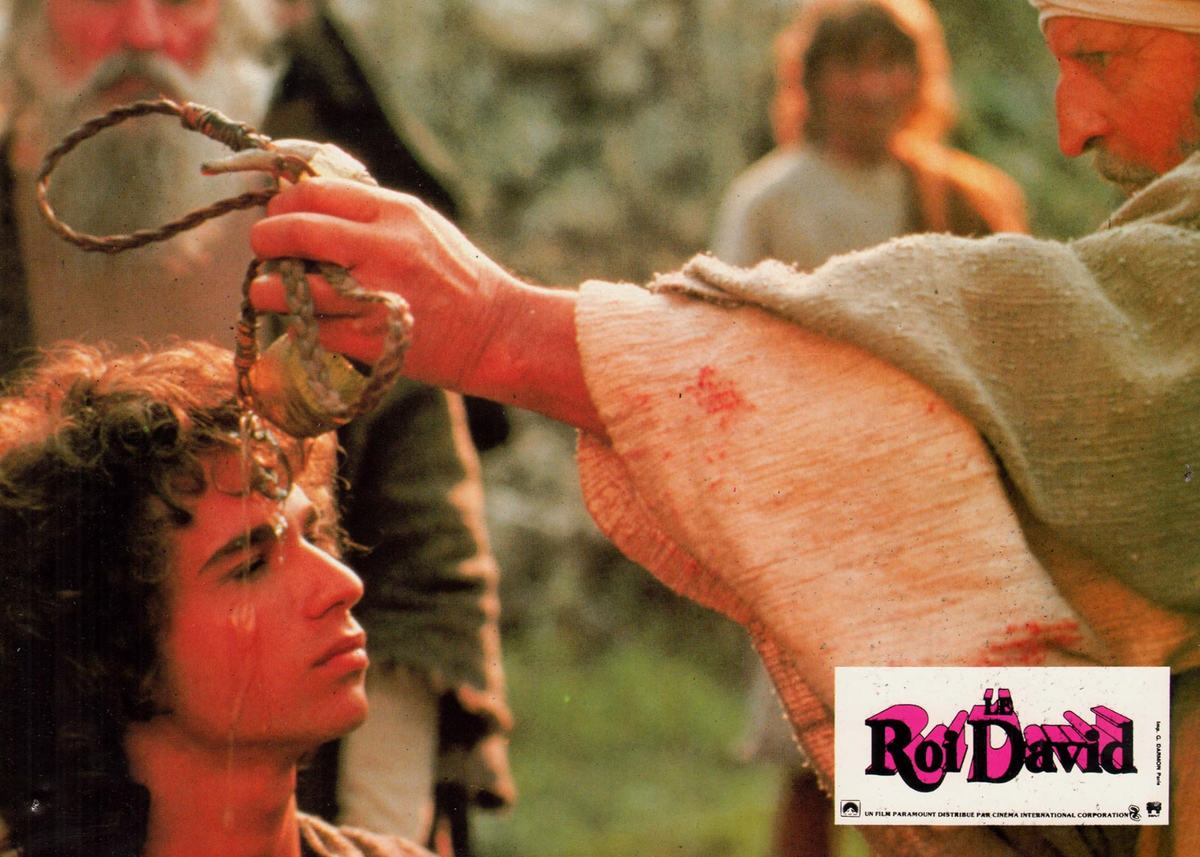
“Look, I have seen a son of Jesse the Bethlehemite, who is skillful in playing, a mighty man of valor, a man of war, prudent in speech, and a handsome person; and the Lord is with him.” 1 Samuel 16:18
In this article:
- The shepherd boy with the cleanest eyes
- The three phases of my relationship with David
The shepherd boy with the cleanest eyes
There is a shepherd boy, singing aloud as he plays his lyre alone in the field, his sheep grazing nearby. His eyes, clean as the sky, gaze into the distance, where the wind ripples the grass like waves upon the sea.
The days go on like this until, one day, one of his elder brothers comes to call him home in the midday, so urgently and grudgingly that he has to leave the sheep where they are.
He arrives to see everyone standing, and among his family sits an old man before whom even the elders tremble. He is the prophet of the Lord, and all his life, none of his words have fallen to the ground unfulfilled.
The prophet stands up immediately as the boy walks past the doorframe, looking at him in a way no one ever has. There is light in the boy’s eyes, a glow on his face, and a strange peace he carries into the room—of the great burning sun setting over the wilderness. The prophet observes him from head to toe with wonder and joy, as if he has come to their home just for him—as if he knows him, to a depth the boy himself does not yet know.
“Kneel,” the prophet says.
The boy falls straight to the ground, surrounded by his father and elder brothers who, for the first time, are not the main characters in the family.
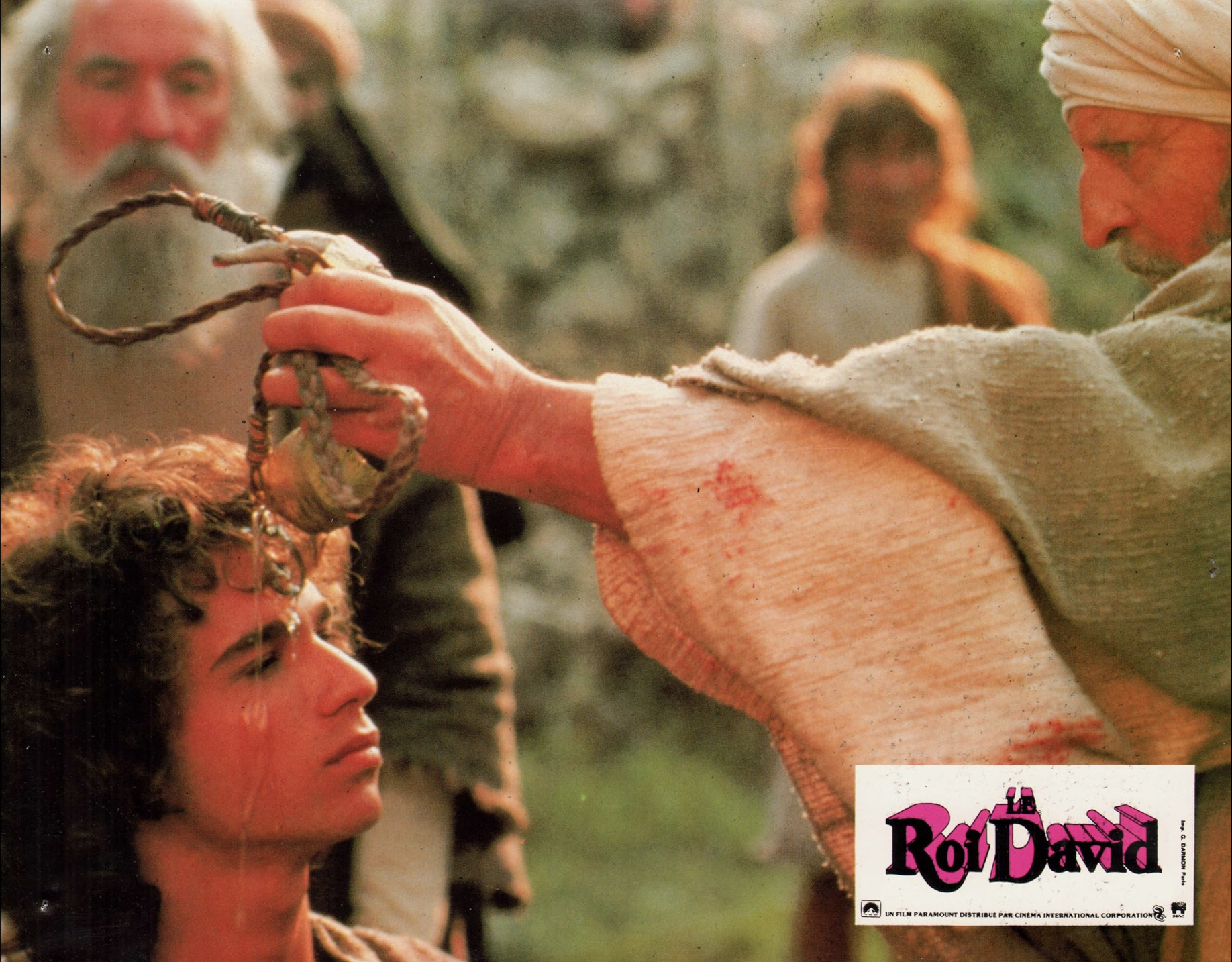
The prophet does not say anything more, but simply walks toward him. When he takes out the anointing oil, the boy is ravished in trembling fear. His eyes glaze over the tassels of the prophet and his sandals. When the oil drips from his head to his face, he can’t help but fall with his face to the ground.
Nothing seems to change after the prophet leaves. He is back to the sheep, and his three eldest brothers are back to the king’s army. The anointing feels like a dream—one of those fuzzy dreams he had when he dozed in the sun, lying on the warm slate of stone.
But here, lions come, and so do the bears.
This day, a lion approaches the sheep. The boy hits the lion in the face with stones from his shepherd’s bag, hurled by a sling. The lion snatches a lamb and flees, but the boy chases after it, making several attempts to strike it with his staff. He chases it all the way to the lion’s den. The lion rises to attack him. He grabs its mane and strikes it till it dies.
The boy carries the lamb back with tears in his eyes, picks up his lyre, and leads the sheep home.
His father is already on his way to find him when they meet halfway, for the king sends for the boy.
“She won’t make it,” his father says, shaking his head at the half-dead lamb in the boy’s arms. He has the boy cleaned, loads him onto a donkey carrying bread, a bottle of wine, and a young goat, and then sends him to the king.
The king is a mighty man of war—tall, strong, and handsome, with all the looks of a king—yet he is deeply troubled. The boy brings him peace through his playing, and the king has sent for him almost every day since.
One evening, he sings more songs alone in the field, for he had passed the princess on his way out earlier. The king favors him, but he knows that being skilled at the lyre is not the kind of favor that will win him the king’s daughter’s hand.
A year passes, and then another. The boy grows taller and stronger. He hasn’t seen lions or bears for a while. The beasts have learned that this shepherd is not satisfied with merely driving them away; he will take his sheep back from their mouths, dead or alive.
The boy is instead troubled by something else. There’s this girl he sees often by the well. This day, he overhears the girl talking to the other girls about him, saying that the shepherd boy has “the lover eyes,” and he is “pretty,” and they all laugh. He’s so embarrassed that he decides to never look at her again.
His three eldest brothers haven’t come home for forty days. They are at the front line, in a deadlock with the Philistines. At noon, his father comes to the field and gives him a lunch bag to send to his brothers and their captains.
The boy hurries to find his brothers. He chats with them and other soldiers for a bit. Just then, a giant who is the Champion of the Philistines comes out to provoke the Israelite army, patrolling around, flexing, mocking, and threatening. They say that the giant has been doing this all these forty days.
The boy is suddenly filled with anger, and he speaks out, not noticing everyone else around him is shadowed in fear.
“What reward will I get if I kill this uncircumcised Philistine that insults the armies of the living God?”
The soldiers answer, “Well, then you’re gonna marry the princess.”
They laugh as if they have finally found a little relief in this arrogant and ignorant shepherd boy.
Everything clicks. The boy knows this is it—this is the moment. The anger that fills his bosom does not twist his face nor muddy his eyes. Something takes over him, and he starts to move and speak in such a way that he doesn’t feel like himself, as if he has never known fear. All he feels now is what God feels.
His oldest brother hears him, and he rebukes him harshly. But he ignores him and moves through the soldiers, asking around again and again, and quickly it reaches the king’s ears, and the king sends for the boy.
The king has forgotten about him. He looks at the boy with appreciation—but not the way the prophet looked at him. Never again would another man look at him as the prophet did.
The king kindly discourages him from going to fight the giant, but the boy tells him all the battles he has fought while shepherding his father’s sheep. He knows that the Lord was with him then as He is with him now.
“Go,” the king’s countenance changes, as he recognizes on the boy what he once had, “and the Lord be with you.”
The king arms the boy with his own armor, helmet, and sword with a heart that beats so fast that he cannot hear anything else, which gives him the peace he misses.
The boy doesn’t take this great honor, however. He goes ahead in his shepherd’s clothing, with his shepherd’s bag and the sling in his hand.
The giant looks at the pretty boy whom Israel has sent, offended, and curses him, “Am I a dog that you come to me with a sling? Come over, I will give your flesh to feed the fowls of the air and the beasts of the field.”
And the boy answers:
“This day will the Lord deliver you into my hand, and I will strike you down, take your head from you, and give the carcasses of your lords and gods to the fowls of the air and the wild beasts of the earth—that the earth may know there is a God in Israel.”
And he looks up and around, his voice echoing between the two armies like an eagle hovering above the valley:
“And all this assembly shall know that the Lord saves not with sword and spear—for the battle is the Lord’s, and He will give you into our hands.”
The giant boils with fury at hearing the boy, and he draws near to kill him. The boy runs toward him, who moves much slower and is far easier to target than lions and bears, and as he runs, he takes out a smooth stone from his shepherd’s bag, and when the distance is right, he strikes the giant in the forehead—the stone goes into his head, and the giant falls upon his face to the earth, kicking up a storm of dust.
The boy runs through the dust to the giant and takes his sword, cutting his head off his shoulders without blinking, so swiftly and skillfully as if he had been trained to kill from his mother’s womb.
Then the Philistines flee, and in an outburst of yelling, the Israelite armies flood over the battlefield from behind, pursuing the Philistines. Soon, he is left alone with the giant he has just killed.
He raises his face to the sky, closing his eyes in a deep breath. The head drops and rolls a few steps away. A sudden dizziness hits him in a white glare, and he falls to his knees, just as he did that day when the prophet walked toward him.
He cannot yet ruminate on what has just happened—how his life will change from this battle onward, or how others will perceive him differently. He only knows who did it. And that awareness is overwhelming. It has left him astonished for the few days since he returned to shepherding. He almost forgot that he had the right to claim his reward—the princess—until the king sent for him.
“My God,” the boy says, with his face to the ground by the giant’s body, “You are faithful.”
The three phases of my relationship with David
“O God, You have taught me from my youth,
And I still declare Your wondrous deeds.” Psalm 71:17
First phase: Micah watching from the window
The main character of the Bible, second to Jesus, is David.
I had trouble with David when I first started reading the Bible in September 2022. He committed adultery and murdered the husband of the woman he slept with. My feeling toward David had been like Micah, Saul’s daughter—watching him dance from the window and despising him in my heart.
You know it’s over before it begins when a woman despises a man—even if she is unaware of it.
I would NEVER, EVER sin that big, even if I were a man.
Of course, I never spoke that out loud, not even in my journal—definitely not in my prayer.
I didn’t read Psalms—intentionally—until April 2023, when I was baptized.
Surprise, surprise. The adulterer did have something I cared to hear. I’ve never felt so close to God as on the days when I was reading Psalms. I could tell the difference between the Psalms written by David and those written by someone else, and David’s Psalms always stood out to me in a way that made my spirit leap, like John leapt in Elizabeth’s womb when Mary, pregnant with Jesus, walked in.
I felt that I “forgave” David, especially when I read Psalm 71 and realized that I was just like him—someone whom the Lord has been teaching since youth.
But God knew what was in my heart—the things I didn’t admit to His face or even acknowledge were there.
Second phase: the source of darkness is doubt
One day, I was led to pray the best prayer I had ever prayed in my life:
“Lord, let there be no darkness in me. Let me be full of light, just like You.”
Soon after this, on one morning in June 2023, when I bittersweetly finished Psalms, I heard clearly from God to go read the part David committed adultery, skipping all the context and books previously.
When Prophet Nathan came to tell him the story of a rich man who took a poor man’s only lamb and killed it for meat, I was furious yet I could barely move.
And David stood up in anger and declared that the rich man must surely be put to death.
“You are that man!” the prophet said.
You are that man.
It pierced me like a sword, and tears streamed down my face as I struggled to read the blurry words of God’s judgment. Before I even finished the list of punishments upon David, I began crying aloud in my room.
I realized what had happened immediately. I was going through a deliverance—from doubting God’s justice and holding a grudge against His “favoritism” toward David.
The judgment upon David’s sin was greater than I expected and, counterintuitively, it comforted me more than His grace.
His grace redeems. His love transforms. But it is His fear and judgment that make Him so trustworthy—just as a nice guy with no boundaries is unreliable, and a soft, invisible father who is not fearsome at all cannot give his children a sense of security.
That doubt of God’s justice had been swept under the carpet in a dark corner of my heart. And it was after that day that there was no darkness in me.
Not that I have never had sinful thoughts, but I have never doubted God—and Doubting God is where darkness seeps in.
The process for me to “forgive” David is the process of knowing Him.
Actually, the process to forgive anyone is the process of “forgiving” Him who allowed the hurt to happen.
But that was only the second phase in my relationship with David.
Final phase: is it him or Him; I know him or am I him
God says that David is “a man after His own heart.”
I was still pretty indignant about that even after the second phase. Isn’t Joseph better? Isn’t Abraham more faithful? Why the heck does this former adulterer and murderer get the most validation? Why is even the Son of God called the Son of David? Why is this asshole who sinned bigger than all the chosen ones, such a main character?
It wasn’t until this year that I understood, why David.
The Lord gave me His eyes to see David when he was shepherding in the field. And that was the vision that changed everything.
It wasn’t the young David that I saw—it was the heart of God.
There’s something about seeing God. He is like the wind, which you can only see through something else—the trees, the waves, the dancing of the leaves. Very rarely have I seen Him in a person.
There’s this knowing in my heart—with such great assurance—that if I saw Him in a person, I would know immediately. I would not be able to perceive time or space. I would not hear the din of the crowd. I would not remember how I came here or where I’m going, for this is it—all I need, all I want, all the meanings and answers.
So that’s what happened when I saw David in that vision. It felt like the two dreams I had when the Lord came in. I couldn’t quite pinpoint His facial features, only a vague figure with this mellow glow on His countenance—but I knew without a doubt that He was the Lord.
God is right—he truly is after His own heart. He truly is just like Him—as much as a mere man can be.
“It is more blessed to give than to receive.” (Acts 20:35) Alice by the Palm is a reader-supported publication. If you’re able and willing, consider:
- Giving ☕️ (various payment options available)
- Get the book 📖The Truth is Counterintuitive—Renew your mind and think like Jesus (for readers outside US, type the title directly in your nation’s Amazon website. You can also get kindle version from my Patreon.)
- Upgrading for more values(click for details👇🏻), ONLY $3.32/month
I saw his heart through the lens of God, a heart that takes one to know one, that I didn’t see it before because I didn’t have the same heart.
I saw him—or Him. I felt like I knew him—or I am him. I don’t know anymore.
The Lord saw a glimpse of Himself in this young boy: a meek spirit full of faith and courage. The boy spends most of his youth alone. His eyes are clean but not as clean as his heart. His arms are strong but not as strong as his heart. He worships the Lord all the time in spirit. He thinks about Him, and the thought of God keeps him unself-conscious. He does not worship his own beauty and strength. He does not covet his brothers or grow resentment toward his father. He does not crave validations. He does not constantly look for what’s next for in the Lord he’s arrived. His heart is as peaceful as the surface of the lake. He is humble and confident. He leaves the 99 for the one lost sheep.
He is just like Him—as much as a mere man can be.
I wasn’t able to see what God saw in David until I went through 10% of the troubles David went through. It isn’t about my relationship or my opinion on David—it has always been about my relationship with God.
“Cast me not off in the time of old age; forsake me not when my strength failed.” Psalm 71:9
David didn’t resist his son Absalom, who sinned against him in every possible way. I read that a long time ago, but it wasn’t until now that I felt the pain of David so viscerally. He knew that it was merely God’s word coming to pass as the punishment of his own sins. He wondered if only he had never committed adultery, would his daughter Tamar marry a worthy man, would his son Amnon still be alive, and would Absalom’s soul be safe.
I used to despise David so much that I refused to read Psalms. It felt like I didn’t truly “get it” back then. It is through my struggling “relationship” with David that I realized that all who love God are one in spirit, that we are able to weep when another weeps, and laugh when another laughs, because it is the same Spirit of God that moves in us.
Men look at outer appearance, but God looks at the heart.
And it was in this vision of David that I first discovered that you can truly see the heart of a man crystal clear.
“For now we see in a mirror dimly, but then face to face. Now I know in part; then I shall know fully, even as I have been fully known.” 1 Corinthians 13:12
Discernment is seeing signs and “flags” to infer the heart and spirit of a person—but in this vision, I see directly as God sees men, as if the soul and spirit are all that truly exist. This ability probably won’t follow me 24/7—and I’m pretty sure it’s going to drive me crazy to see evil also that clearly—but I realized the best way to live is to be a mere vessel for Him, to see what God sees, to feel what God feels, to do what God says.
Lord, I pray again for death to self and to be just like You, as much as a mere man can be.
What’s next:
 Alice
Alice
 Alice
Alice
 Alice
Alice
Share it for later use