How Come that Pilate, Who Didn’t Want to Kill Jesus Killed Jesus?
This Roman had some discernment, some compassion, some fear of God, and some curiosity for the truth—you too?
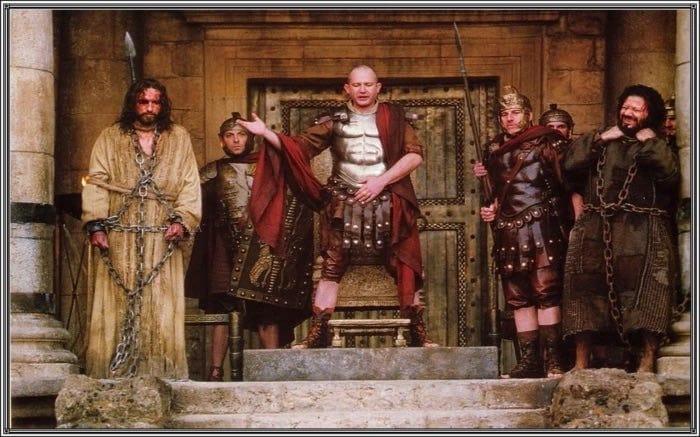
This Roman had some discernment, some compassion, some fear of God, and some curiosity for the truth—yet none of these qualifies us for the Kingdom of God.
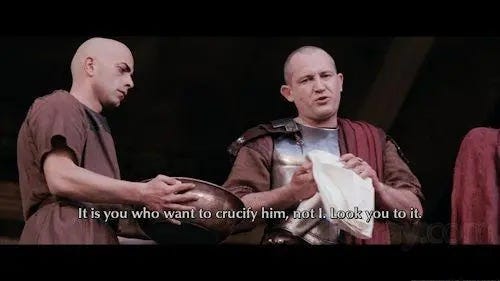
When I first knew Pontius Pilate, I sympathized with him—poor man, he didn’t want to kill Jesus at all. He was trying to save his life. It was all because of those Jews.
After reading the gospels over and over, I noticed another man in power, Herod, who didn’t want to kill John the Baptist beheaded John the Baptist.
Pilate who didn’t want to kill Jesus crucified Jesus.
Both these two men seemed to have no bad intentions yet they were the executors of evil.
We know that many things are not “necessarily wicked” but they are in God’s eyes. For example, in the Parable of Talents, Jesus called the slave who hid his master’s money instead of multiplying it, “lazy, wicked slave.”
“We often don’t think this way, but laziness is wickedness.” — Derek Prince
What then, defines the evil of Pilate and Herod?
Passivity & Lukewarmness
Pilate, a Roman governor, was coerced by the Jews to crucify Jesus.
Herod, the king of Judea, was given an order from his stepdaughter to behead John the Baptist.
And who else does that sound like?
Well, Ahab, the king of Israel, or rather, the husband of Jezebel.
Ahab didn’t scheme to kill the farmer and take his property either. Jezebel, his wife and queen did.
Now, these three men in power have this common evil—passivity.
Let me reinforce that: passive men are evil. They are like “the surf of the sea, driven and tossed by the wind.” (James 1:6)
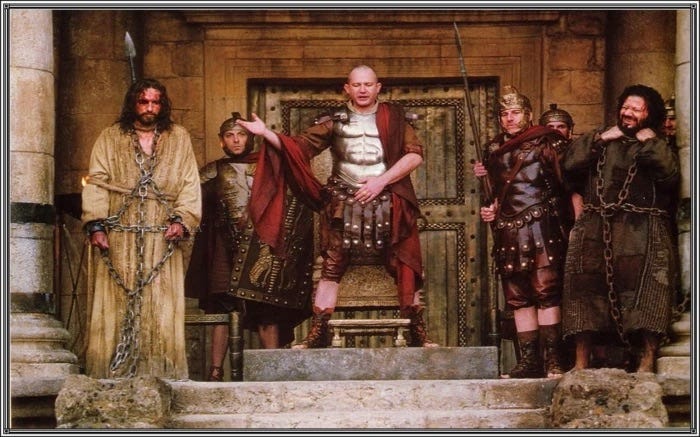
The Jews overpowered Pilate, their governor, to the degree that he even went as far as to flog Jesus to change their mind, and seeing that it didn’t work, he went even further by feigning wisdom and letting them choose between Barabbas and Jesus.
Pilate really tried to help, didn’t he?
Why did Pilate have this mercy over Jesus then?
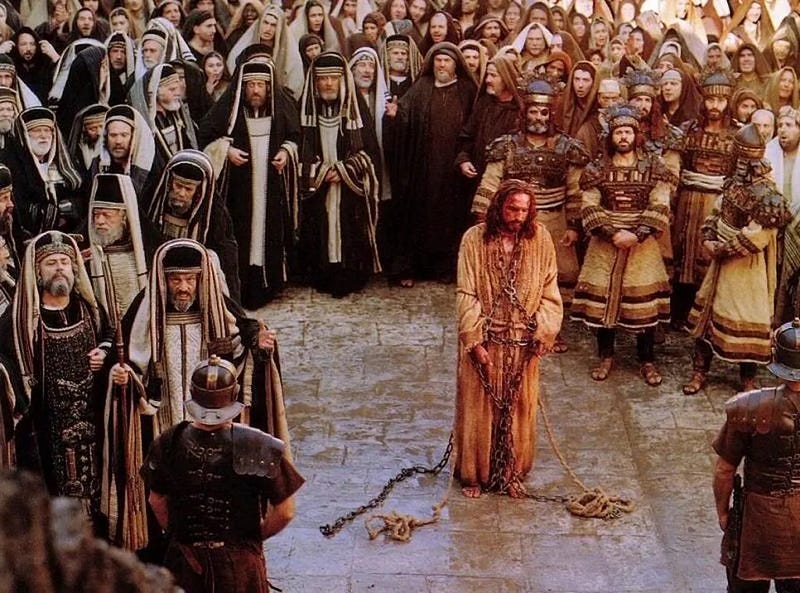
I believe there was something similar to the reason why Herod “kept John the Baptist safe.”
Because Herod was afraid of John who was a holy man, and Herod even “used to enjoy listening to him” until John came over to convict him personally, and the conviction “perplexed” him. (Mark 6:20)
Pilate sensed something unusual from Jesus, didn’t he? And what he sensed, he was afraid of. He sort of believed that Jesus is the son of God.
Sort of.
Pilate was amazed at Jesus’s silence before him, afraid of the charges against Jesus for He claimed to be “the Son of God.” He “made efforts” to release Him.
Pilate even penetrated from the beginning that the Jews brought Jesus to him because of jealousy.
This Roman had some discernment, some compassion, some fear of God, and some curiosity for the truth.
Similarly, Herod used to enjoy listening to John the Baptist. There must be a part of him acknowledging and admiring the holiness in John.
Pilate said to Him, “What is truth?” (John 19:38)
Does that sound familiar?
Aren’t that you who are lukewarm?
You too have some love for God, some fear of Him, some spiritual discernment, some curiosity for His revelation, some time to seek Him, and some enjoyment in reading the Word and listening to sermons.
Even Pilate and Herod qualified for that level of “righteousness.”
Passivity and lukewarmness are the precursors of evil.
‘I know your deeds, that you are neither cold nor hot; I wish that you were cold or hot. So because you are lukewarm, and neither hot nor cold, I will spit you out of My mouth.” Revelation 3:15–16
The Fear of Men & Double-mindedness
How did Pilate eventually give in to the Jews? How did Herod end up beheading John?
The fear of men it is.
“The fear of man brings a snare, but whoever trusts in the Lord shall be safe.” Proverbs 29:25
“And I say to you, My friends, do not be afraid of those who kill the body, and after that have no more that they can do. But I will show you whom you should fear: Fear Him who, after He has killed, has power to cast into hell; yes, I say to you, fear Him!” Luke 12:4–5
Notice that the fear of men does not eliminate the fear of God—Pilate feared Jesus, Herod feared John the Baptist.
—but that the fear of God MUST eliminate the fear of men, or the fear of God, the true blessing, will forsake you.
You cannot ask and doubt (James 1:6-7). You cannot love and fear (1 John 4:18). You cannot fear God and fear men.
In a word, you cannot be double-minded.
“For let not that man suppose that he will receive anything from the Lord; he is a double-minded man, unstable in all his ways.” James 1:7–8
Saul was another man in power and was forsaken by God after Saul’s consistent disobedience. Honestly, I didn’t find anything about Saul that was outrageous enough for God to forsake him. Yes, he offered burnt offering; yes, he didn’t wait until Samuel showed up, which “came across” as disobedience—
But if you look into it, you’ll notice that Saul didn’t wait for Samuel because he feared men.
“Then he waited seven days, according to the time set by Samuel. But Samuel did not come to Gilgal; and the people were scattered from him. So Saul said, ‘Bring a burnt offering and peace offerings here to me.’ And he offered the burnt offering.” 1 Samuel 13:8–9
Pilate feared the Jews, or rather, the crowd; he feared Cesar, or rather, men.
Herod first made a public vow he should never have made, and then out of the fear of men, he fulfilled his vow.
The fear of men very often is exposed under public pressure, and a person’s behavior and choice under public pressure originate from self-idolatry. To break this down—
those who fear men fear what men think of them. Saul, Pilate, and Herod feared what would happen if they disappointed people.
When we say yes to men, we say no to God. When we choose to preserve our self-image before men, we choose to renounce our identity in God.
You can’t fear men and fear God, for that remaining fear of God in you shall be taken away—because God won’t settle for less. He wants all our hearts, all our minds, all our souls, and all our strengths to Himself.
“For whoever has, to him more will be given, and he will have abundance; but whoever does not have, even what he has will be taken away from him.”
Matthew 13:12
Reference
The biblical characters I mentioned above are:
- Pilate, the Roman governor (John 18:28–40 & 19:1–22)
- Herod, the king of Judaea (Mark 6:14–30)
- Ahab, Jezebel’s husband (1 Kings 21)
- Saul, the king of Israel (1 Samuel)
If you find these stories and characters interesting, I strongly recommend reading those books and chapters.
Last Words
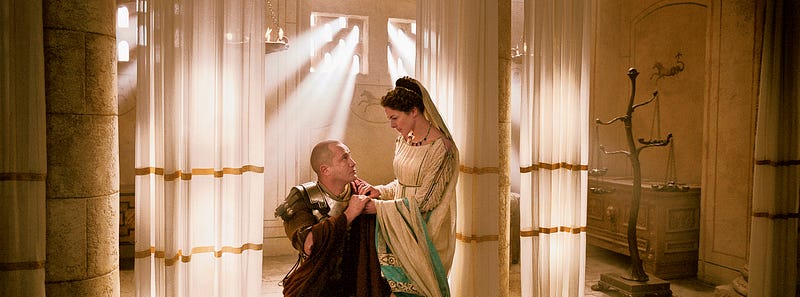
I love how the film The Passion of The Christ (2004) portrayed Pilate and his wife, who sent him a message asking him to “have nothing to do with that righteous man” as she “suffered greatly in a dream because of Him.” (Matthew 27:19)
In the film, Pilate asked Jesus, “What is truth?” but Jesus kept silent. So he asked his wife again, “What is truth,” and she answered him, “If you will not hear the truth, no one can tell you.”
Her words greatly inspired me on something fundamental about Christianity—
“He who has ears to hear, let him hear.”
That’s another abrasive topic for another time.
If you would like to quit lukewarmness, check out this earlier article of mine:
Why and How to Keep God’s Commandments When You Don’t UnderstandObedience comes after love. Understanding comes after obedience.almeralicehe.medium.com
God Bless,
Alice